Savia Bolivia
The vast ecoregion of the Chaco, Chiquitania, Pantanal, and Southern Amazon in Bolivia is one of the most threatened by large-scale deforestation. Therefore, this project seeks to consolidate the protection of key ecosystems and natural resources, contributing to biodiversity conservation and the continuity of evolutionary ecological processes in nature. This will be achieved by establishing conservation corridors between existing protected areas under various management structures, as well as Indigenous Territories, with the aim of ensuring the future of the region's cultures and livelihoods. This vision involves emphasizing capacity building and strengthening the Management Committees of Protected Areas and the leadership of Indigenous Territories and Local Communities, in order to enhance their ability to address the various challenges they face. The initiative is supported by the Monaco Foundation.
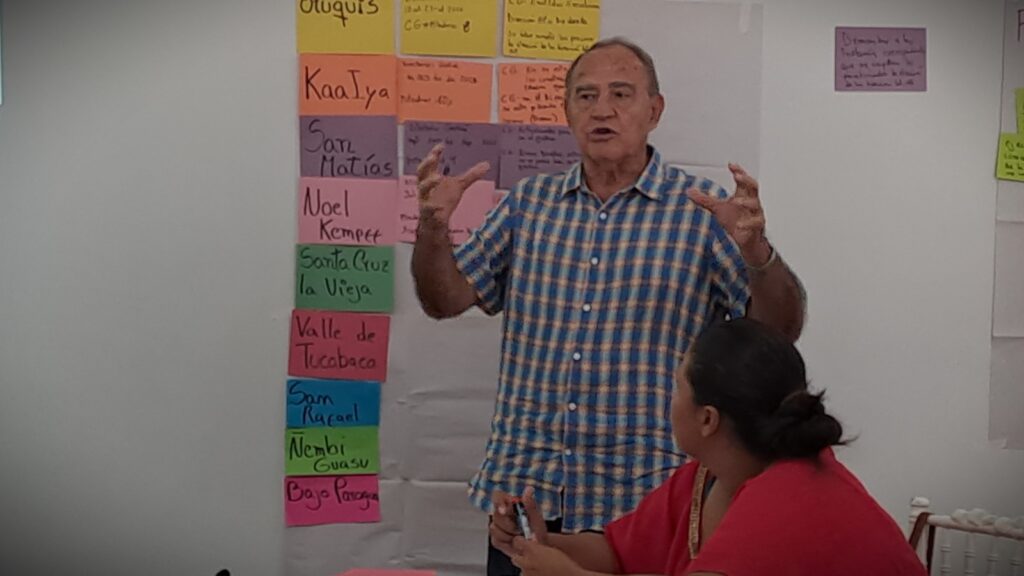
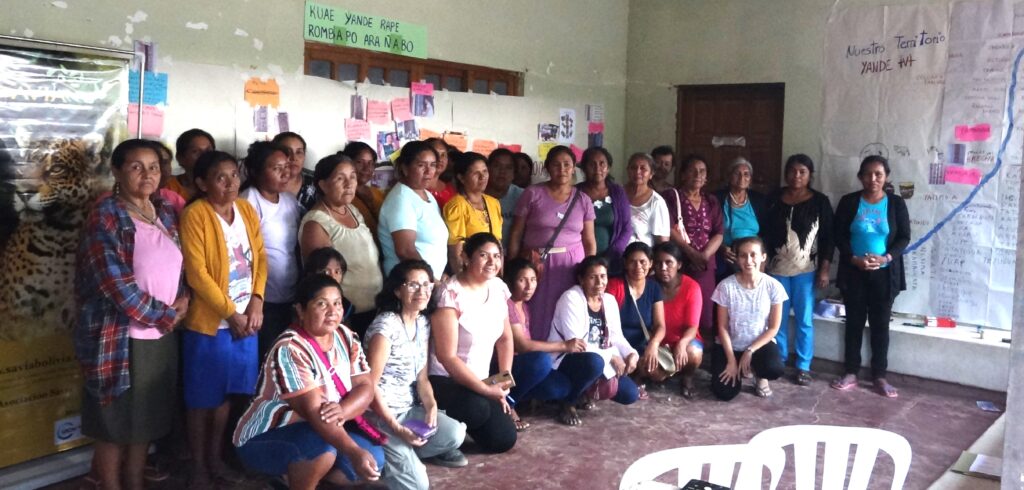
The protected areas of the Chaco, Chiquitanía, Pantanal, and Southern Amazon are currently vulnerable to latent threats, making it a priority for local actors to unite to strengthen their governance and protect their territories. In this context, this project aims to organize protected area management committees, working with stakeholders from these territories to increase and improve the capacity of their representatives through knowledge management. Within this framework, the initiative supports the management committees, as they are the representative bodies where the local population participates in the planning and oversight of area management. These committees serve as the participatory body that incorporates Indigenous and peasant representatives, public and private entities, and social or civic organizations from the region into the management process.
The Kaa-Iya del Gran Chaco National Park and Integrated Management Natural Area (ANMI), with 3,441,115 hectares, is the largest protected area in Bolivia. Although it is a geographically defined and managed space that fulfills conservation objectives, it is increasingly threatened by pressures from its surrounding areas. In recent decades, large illegal settlements have sprung up, usually motivated by the exploitation of natural resources. This initiative aims to further promote and instill in local communities, particularly those of Guarani and Chiquitano origin, the importance of the Kaa-Iya del Gran Chaco National Park and ANMI, contributing to the objectives of the protected area's management plan related to safeguarding the natural and cultural heritage of indigenous peoples. The project is implemented within the framework of the UNDP Small Grants Programme (SGP).
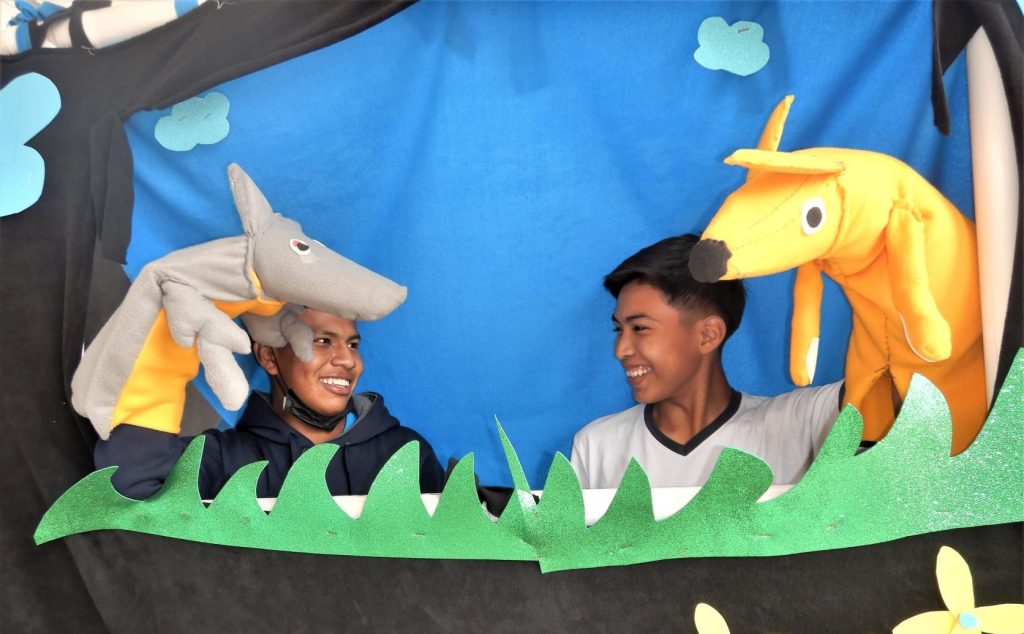
In the Chaco and Chiquitina regions, there is an accelerated process of cultural loss and erosion of traditional values associated with the jaguar. This loss is particularly noticeable and frequent among children and young people, who come to disregard traditional values and the knowledge of elders in their communities. This project aimed to focus its efforts on cataloging and rescuing ancestral knowledge about the jaguar (myths, stories, narratives, songs, etc.). Gender inclusion was considered essential, achieved by inviting young and elderly women from the communities to participate in teams documenting traditional knowledge. This information was then systematized and disseminated through awareness-raising activities for children and adolescents, facilitated by Environmental Multipliers. The project was supported by the IUCN.
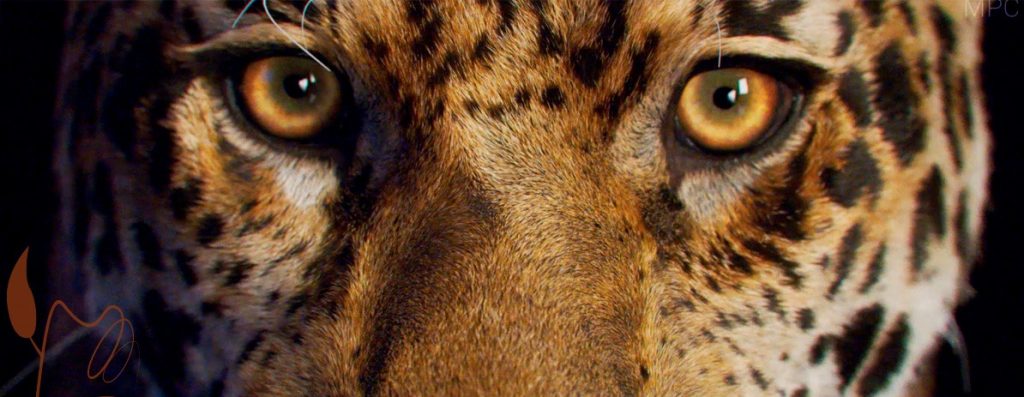
The main objective of Operation Jaguar Project is the conservation of the species Panthera onca, The project focuses on major threats, particularly habitat loss, poaching, and trafficking of jaguar parts. Operation Jaguar is a joint initiative of the International Union for Conservation of Nature Netherlands (IUCN-NL) in Bolivia, Suriname, and Guyana. In Bolivia, the SAVIA Association serves as the project's counterpart.
The GLA II (Green Livelihoods Alliance) Program promotes inclusive and sustainable management of the territories of Indigenous Peoples and Local Communities (IPLCs) and Protected Area Management Committees in the greater Chiquitanía-Chaco, Pantanal, and Southern Amazon regions. It optimizes actions to ensure that Indigenous territories, protected areas, and municipalities participate in processes of effective protection, sustainable governance, forest management, and the preservation of their livelihoods. GLA II aims to encourage governments to develop and implement policies that respect forests, human rights, the rights of IPLCs and women, and to empower stakeholders to defend their territories.
ICCAs are “Territories of Life,” governed and managed by traditional peoples and communities who have lived there for centuries. They are a source of food, medicine, water, and many other necessities for the community's livelihoods, as well as for their health, thriving environments, and sacred sites. ICCAs in Latin America and the Caribbean manage and protect ecosystems and biodiversity in their traditional spaces, despite all the difficulties and obstacles they face from prevailing development models. ICCAs protect most of the natural heritage of Latin America and the Caribbean. Savia was the entity responsible for monitoring and evaluating the implementation of projects that maintain the ICCA component, which were approved in relation to national protected areas, within the framework of the United Nations Small Grants Programme.