Connecting the Kaa-Iya Protected Area with its people
The Kaa-Iya del Gran Chaco National Park and ANMI, with 3,441,115 hectares, is the largest protected area in Bolivia. Although it is a geographically delimited and managed space that fulfills conservation objectives, it is increasingly threatened by the pressures it faces in its surrounding areas, registering in recent decades large illegal settlements that are usually motivated by the use of natural resources.
Despite being a territory that forms an important part of the identity of the Guarani and Chiquitano peoples, the local populations and authorities are often absent. This lack of commitment and compliance with the law is also reflected in education and the limited information promoted locally about the benefits of protected areas like Kaa-Iya. To help transform this reality, Savia proposes to promote a resilient societies program, which highlights the need to focus on women artisans and new generations. In this way, local work is continued through this project, which is funded by the UNDP Bolivia Small Grants Programme.
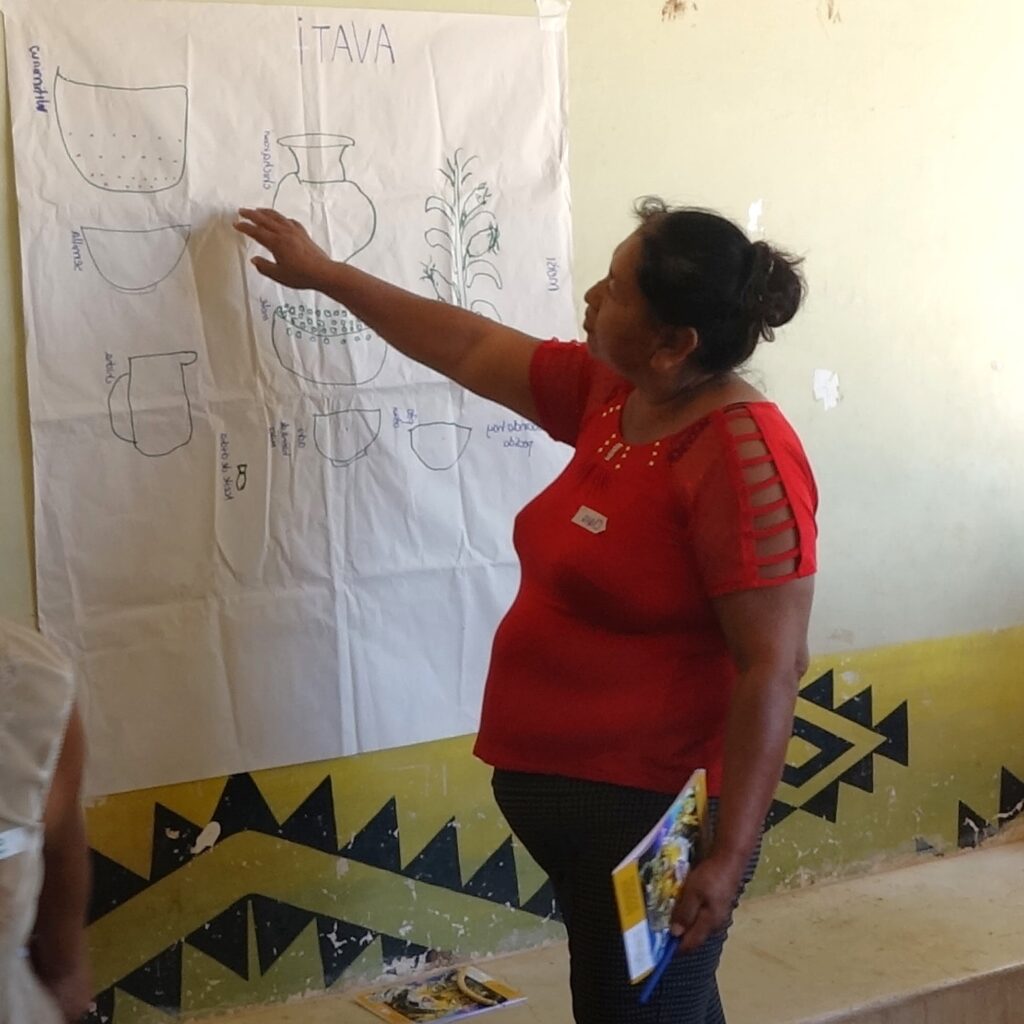
It should be emphasized that, through this initiative, the strengthening of governance and environmental education in young people and women artisans is achieved by training them as environmental promoters on topics of conservation of ecological, biological, cultural and ancestral sites for the Isoseño and Chiquitano people, and their importance for the ecoregion to which they belong.
With the premise of promoting the conservation values of protected areas and their connectivity sites, the involvement of young Guarani and Chiquitano people focuses on horizontal environmental education, training them with playful puppet tools so that, through the stories they perform, other children and the general population can be made aware of the relationship between people/culture/biodiversity.
For its part, the program considers the fundamental role that women play in societies, identifying that in the intervention area there is a large number of entrepreneurial artisans who produce products in their territories every day, and that not all of them receive support; despite their important contribution, they are often excluded from decision-making and their potential is made invisible.
Undoubtedly, programs aimed at fostering social, economic, and environmental resilience and ensuring sustainable development will have a greater chance of success if they value and incorporate women's existing knowledge and strengthen their involvement in the process. Therefore, this project promotes the quiet participation of women artisans and strengthens their spaces (organizations, associations) while preserving their sense of identity.
The work area encompasses the geographical mosaic that unites the Chaco and Chiquitania ecoregions, concentrating on communities in the external buffer zone of the Kaa-Iya protected area, in the West with Guarani communities of the Autonomous Guarani Government Charagua Iyambae, and in the North with Chiquitana communities belonging to the municipalities of Pailón and San José de Chiquitos; which are also connectivity zones with departmental protected areas such as the UCPN Santa Cruz la Vieja and Laguna Concepción.
Aim.
Promote, train and strengthen Chiquitano and Guaraní women artisans and young environmental multipliers in the protection and conservation of the Kaa-Iya National Park and Integrated Management Natural Area of the Gran Chaco and the importance of connectivity sites between the Chaco and the Chiquitania.
Direct beneficiaries.
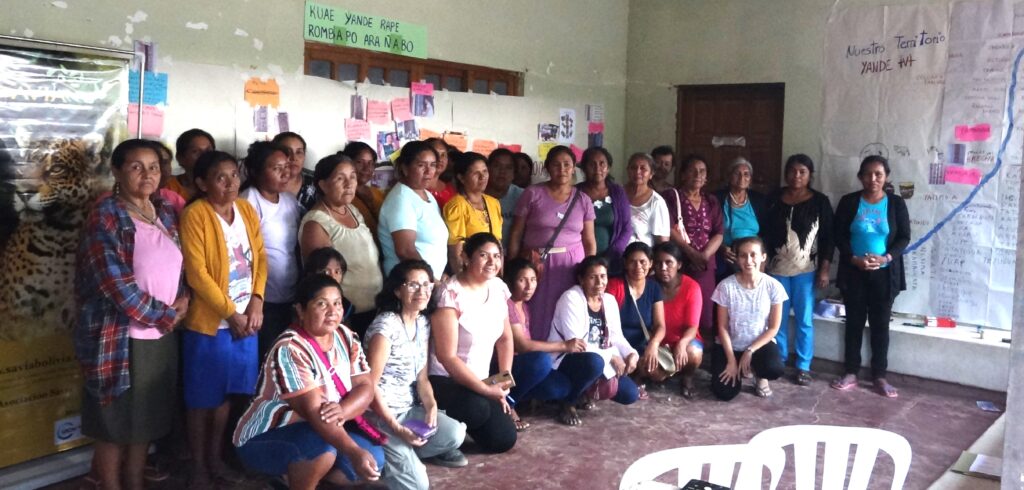
*Women artisans: 15 Guarani women and 15 Chiquitana women of different ages (mostly adults), who are members of artisan groups and/or associations, located in the area of influence of the Kaa Iya del Gran Chaco National Park and Integrated Management Natural Area.
**Selection criteria: The selected communities and the number of participants in the women artisan groups are related to their level of organizational maturity. It is through these groups that the aim is to promote the empowerment and visibility of women artisans in these ecoregions.
*Young Environmental Multipliers: Around 80 young Guaraní and Chiquitano people (12 to 19 years old), from the towns of Cuarirenda, La Brecha, San José de Chiquitos and Tinto, will be trained and educated as environmental multipliers.
**Currently in Cuarirenda, there are 30 Environmental Multipliers (25 young people and 5 teachers), who will be monitored and their capacities as a group will be strengthened, and awareness campaigns will be carried out in their community.
Chiquitano and Guarani youth/children: + over 600 children sensitized by the Chiquitano and Guaraní Environmental Multipliers.
Kaa Iya Protected Area of the Gran Chaco: Work is carried out within the framework of the Kaa Iya Protected Area management plan, where the Directorate, Protection Corps, technicians and members of the Management Committee are a key and active component in the execution of the project (+ 15 involved).
Santa Cruz La Vieja Historical and Archaeological Park: More than 10 people involved, including technicians, park rangers and the Management Committee of the AP UCPN Santa Cruz la Vieja, participation as an area of influence to the Kaa Iya Park is key.
Indirect beneficiaries.
Women artisans: Over 100 members of women's associations benefit from strengthening their organization, promotion and sale of their products.
Indirectly, a large part of the populations where the project will be implemented are involved.
IMAGE GALLERY