
OTUQUIS AND THE PRIORITY OF PRESERVING THEIR WAYS OF LIFE

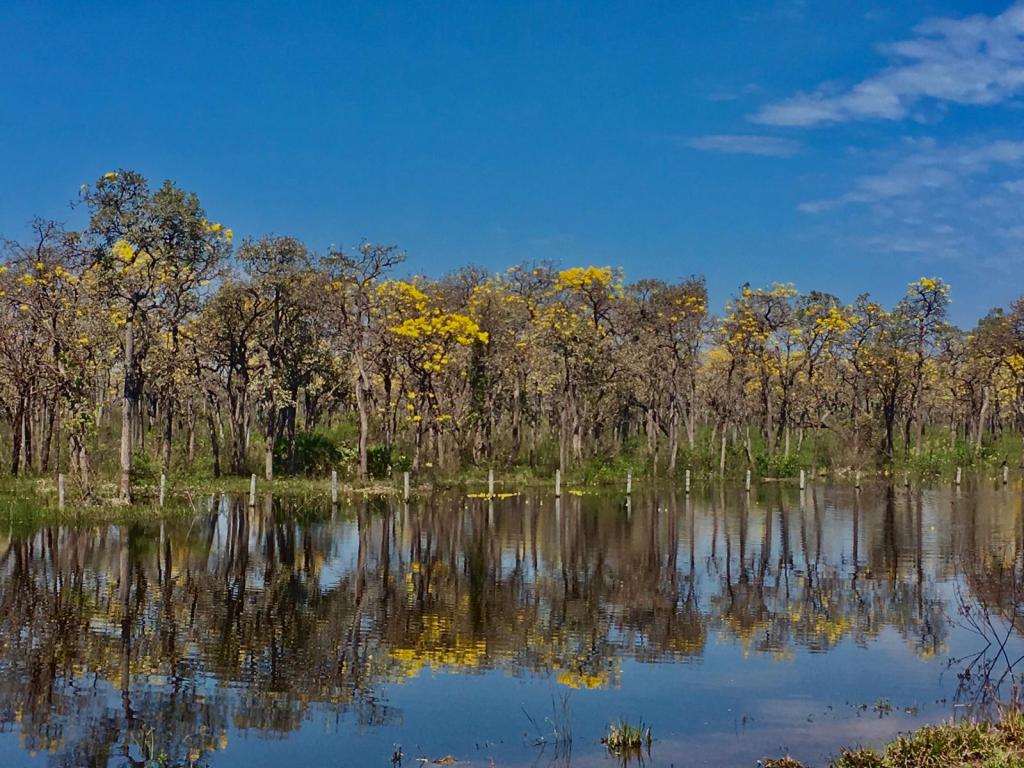
Otuquis is a National Protected Area with two conservation categories: National Park (PN) and Integrated Management National Area (ANMI). Officially recognized on July 31, 1997, by Supreme Decree No. 24762, its creation aimed to conserve tropical dry forests, preserve geomorphological and landscape features and its biological and cultural diversity, as well as conserve threatened species of exceptional value. It also holds significant potential for ecotourism. Its importance as a rich and diverse ecosystem is recognized worldwide, as it encompasses part of the Bolivian Pantanal RAMSAR Site, which, like the San Matías ANMI, was declared a priority natural area for the conservation and sustainable use of wetlands on December 17, 2001.
It is located in the department of Santa Cruz, in the Cordillera and German Bush provinces, bordering Brazil and Paraguay, and covers 1,005,950 hectares. The Otuquis National Park is divided into two blocks: the larger, plains-covered Otuquis Block, located in the municipality of Puerto Suárez and the Charagua Iyambae GAIOC (Geological and Cultural Interest Group) within the Chaco plain; and the Río Pimiento Block, encompassing the municipalities of Puerto Suárez, Puerto Quijarro, and Carmen Rivero Torrez, which is a Precambrian shield. Both blocks feature foothills, plains, and mountain ranges. It belongs to the Río del Plata macro-basin, specifically the Tucavaca and Quebrada Cáceres watersheds.
Within this Protected Area, an estimated 179 bird species have been recorded, including the rhea, southern screamer, great egret, and crowned eagle, among others. Thirty-five reptile species have also been identified, such as the boa constrictor, lizard, turtle, and many more. Among the most representative mammals are the agouti, tapir, capybara, river otter, giant otter, marsh deer, and jaguar. The jaguar, considered a National Heritage species of the State, occupies the top of the food chain.
Human activities such as illegal hunting and forest fires have damaged this habitat of great value to humanity, exacerbating droughts in rivers, lakes, and floodplains that have shrunk to small lagoons. Similarly, Laguna Cáceres, one of the most representative areas of the Bolivian Pantanal, has been affected and is currently on the verge of drying up. The Paraguay River is at its lowest levels in the last 20 years, making navigation by boat difficult. Furthermore, the border with Paraguay is one of the most vulnerable areas and requires increased attention to fires and agricultural expansion.
For all the reasons mentioned above, and even more so regarding the Protected Area, it is considered vitally important to continue working on Public Policies, Environmental Education and Raising Awareness among the national and local population to conserve and protect these natural areas, as well as to promote projects that link the local economy with conservation.
To move towards this goal, institutions promote conservation actions by supporting their management and/or implementing projects aimed at generating local capacities, the local economy, and caring for the representative species that inhabit the area. Among these institutions is the Savia Association and its allies, which, through the Operation Jaguar – Bolivia Project, supported by the Netherlands Committee of the International Union for Conservation of Nature – IUCN-NL, strengthens the knowledge, skills, and attitudes of locals and park rangers to reinforce the protection of this flagship species, which is the pillar of ecosystem well-being, giving greater possibility of balance both in protected areas and in natural spaces outside of them.
Note: Association for the Conservation and Research of Biodiversity and Sustainable Development – SAVIA (Source: Otuquis Management Plan and SERNAP)