

STRENGTHENING PARK RANGERS' KNOWLEDGE TO CONSERVE THE JAGUAR

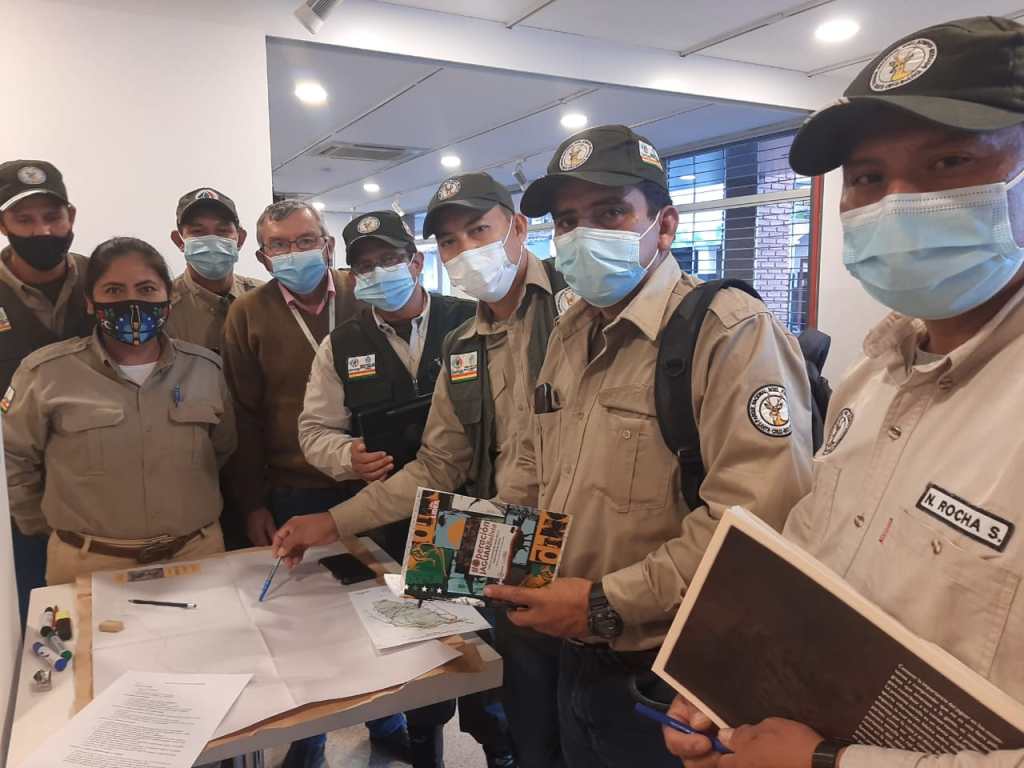
With the participation of the Otuquis National Protected Area, the Kaa-Iya National Protected Area, the Noel Kempff Mercado National Protected Area, and the San Matías National Protected Area, within the framework of the Operation Jaguar Bolivia Project, the “Training Course for Park Rangers: Foundations for Jaguar Conservation” is being held in Santa Cruz on May 24 and 25. This course is important because it aims to expand the knowledge of park rangers to strengthen the effectiveness of their work and enable them to take appropriate action when crimes are detected within the boundaries of the protected areas, in coordination with local authorities. In addition to park rangers, directors and technicians from the protected areas, as well as members of the Chaco Indigenous Journalism School, are also participating.

The main objective of Operation Jaguar is the conservation of the species, and considering that trafficking is one of the strongest threats to its populations, work is being done to combat trafficking with competent authorities and communities, as it is very important to reinforce the fact that they understand the ecological value of the species and its relationship with our water sources and with the health of ecosystems and human beings.

The event is organized by the Association for the Conservation and Research of Biodiversity and Sustainable Development – SAVIA, as the implementing agency for the project, which is funded by the Netherlands Committee of the International Union for Conservation of Nature – IUCN NL. Operation Jaguar was conceived to be implemented in Bolivia, Suriname, and Guyana, with SAVIA serving as the counterpart in Bolivia.

It is important to highlight that the jaguar (Panthera onca) is the largest feline in the Americas and is considered an apex predator. Its primary role is to regulate the abundance of its prey, such as tapirs, deer, peccaries, agoutis, and mice (when jaguars teach their young to hunt), among others. These prey could become pests if the jaguar were absent, negatively impacting the economy and human health. In this way, the jaguar protects forests, their capacity for regeneration and reproduction, maintaining the natural balance and ensuring fundamental environmental functions such as the provision of water and other natural resources. For this reason, we say that: “The presence of the jaguar is an indicator of the good health of ecosystems.”.
